My children and I have been playing outside for years. Sometimes we work, sometimes we study, but most of the time we just wander. We look to see what has changed since the last time we visited a spot (even in our backyard) and what creatures might be traveling where we are near.
Let the children get in touch with nature and a habit is formed which will be a source of delight through his life. (quote from Charlotte herself!)
As we consider these flora and fauna, these insects and birds, we might sketch our impressions and jot down a note or two for further reflection. We keep these notes and thoughts in a simple black spiral journal that appreciates watercolor as well as pencil.
It is unnecessary in the family to give an exhaustive examination to every object.
So WHY nature study?
Nature study lays the foundation for all the sciences. When you see the cycle of seasons, the web of food interactions, the change of the scenery, you begin to see. To really see what is there.
Nature study gives the duty of stewardship of the earth. It is a way to observe the wonderful world that God made for us! In my words, it's a prayer! It's saying oo, ahh, thank you God for all the gifts that you gave us when you made this world in preparation for us. And knowing God gave it to us we want to take care of it.
Nature study encourages more questioning why. When I see the buckeyes that have fallen from the tree are now in pieces at the bottom of a different tree trunk, I begin to ask questions to find out why. And when I see the squirrel scampering in the top of that same tree I begin to answer the questions for myself.
Nature study sees children as persons who need to be sparked or encouraged rather than filled as a vessel with information about the natural world. It's the wonder that comes to a 2 year old child about the environment in which he/she lives. We nurture this excitement or help to restart it when it's lost by complacency in our older years.
and HOW do we complete this nature study?
All is incidental, easy. Nature study is not performance (on the part of the teacher or student!), but rather noticing things as they occur. It's serendipity when a fox crosses your path. It's wonder when there are tracks in the mud by the creek. It's wide eyes in the face of a child at the sound of the wind in the trees overhead. And it's the squeal of joy at the smell of a broken tree branch, "Mommy, mommy, this smells like cherries!".
The teacher gives information when the child is ready-no spoon feeding. A child doesn't want all the information now. They take in what they are ready for and begin to add it to what they already know. When you hear why and how and tell me more, then a child is ready for more information.
Take walks to allow discovery of clouds, trees, streams and flowers. Don't limit yourself to your own backyard. Find ways to spend periods of time in the ditch down the street full of interesting weeds. Consider the creek at the park or the hidden brambles behind the garage for places of new discovery.
Ask simple questions using all five senses. What do you see up? What do you see down? What do you smell in the air? What do you smell on the leaves, the branches, the flowers? What have you touched that was soft, hard? What have you tasted?
Take along a way to collect specimen parts or record your discoveries. Some high tech mommas use photography. I like to do a variety of both-some drawings, some photographs. These nature notebooks become traveling companions and life records to bring science within the range of common thought and experience.
WHAT do you need in order to do nature study?
**your sense of WONDER
**appropriate clothing
**a nature study bag that you keep packed all the time for you never know when a nature walk will call you (for sometimes they call when you've planned to do math!)
And on a side note I am beginning to embrace how there is not separation between the intellectual life and the spiritual life of children. In their eyes they see the wonder of God's world and worship Him as they rejoice in it.
So when do you plan to get out into nature with your children next? Tomorrow? I wonder!
Showing posts sorted by relevance for query nature. Sort by date Show all posts
Showing posts sorted by relevance for query nature. Sort by date Show all posts
Thursday, November 8, 2012
Thursday, July 20, 2017
Making Nature Observations a daily habit
This summer I gave an immersion at the Charlotte Mason Institute East conference at Asbury University in Wilmore, Kentucky. I spent a few hours in the morning explaining the importance of having many hours out of doors with young children. And tried to convey the need for observation skills beginning with the young.
It's ALL ABOUT observing. It's not about the nature journal.
To learn about nature observation, you have to do it. It's a habit. It doesn't come naturally for the adult. Perhaps we have unlearned our ability to observe nature.
Take any 2 year old on a walk and you will find every pebble along the way catches their attention. And perhaps catches their attention so much that they are mesmerized. It's the child's whole focus. When we are hurried as a parent, we rob the child (and ourselves) the chance of good observation. Of wonder. Of being able to see with new eyes.
So how about you? Are you modeling nature observation?
Maybe?
What does nature observation look like in the adult? Just like what a child does. Let a child teach you! Get slow. Don't hurry. Carve out a moment (10 minutes) to just be. Be in nature and let nature be in touch with you. Make this a habit. DAILY.
Perhaps you want to bring focus to your observations? Ask yourself what do you notice? (or what do you notice new?)
Look up. Look down. Look closely. Come close to what has caught your attention. Now far away. Step way back to get a bigger view.
Get in touch with your senses just like a child.
What do you hear? Can you hear anything close? Far away?
What do you smell? Get close enough to smell! {Have you smelled the inside of a broken twig from a choke cherry?}
What do you feel? Is the object of your observation smooth, rough, hot, cold, etc?
What do you taste? Most things in nature can be tasted. It's probably not wise to eat a whole mushroom unless you are knowledgable about mushrooms! But so many things can be tasted in little bits. {Have you tasted a dandelion leaf? How about a blade of grass?}
Let your mind wander with these observations. Does your mind find past memories that link to these new observations you have? Where does your mind take you? Do you find yourself in the past? Have you remembered a place you visited before in which this same specimen was present?
What do you notice?
What do you wonder about?
What does it remind you of?
When you have spent plenty of time making observations, then, and only then, take your nature notebook out of your bag. If you are a talker, you might wish to share in a narrative style by oral transmission to those you know everything you saw today. This can give you a starting point of what you will record. If you are someone who needs to work on your composition, then you definitely should give yourself another 10-20 minutes to write down all you saw/felt/tasted in your nature journal. Try to narrate in a way that will bring you back to this moment of time. Collect all of your observations into a essay of sorts.
If needed, add some dry brushing to illustrate your narrative.
These wondering questions are inspired by John Muir Laws. Enjoy these prompt question bookmarks I made for use in our nature journals. And please share your successes with me! I love to hear about moms (and kids) that are enjoying the natural world that God gave us!
Tuesday, October 10, 2017
a Natural History Club reviewed
Taking a walk with other homeschoolers can be a joyful journey. It can also be lots of kids running in opposite directions, breaking limbs and ruining the time for other children. Have you tried to facilitate a Natural History Club? Take a deep breath.
What might be the benefit to a homeschooling family using a Charlotte Mason approach to being in nature with other like minded families? A shared learning. The ability to see other children and mothers interacting. Deep encouragement to keep doing nature study on a daily basis. Exciting discoveries together.
I have been facilitating Natural History Clubs in different forms for more than 10 years. Each year I try to deepen my understanding of the clubs in England during the early 1900's. Last May, I went to Ambleside to get my hands on some of the nature journals that the students at Scale How kept. I was very impressed. I wanted to bring some of this same depth to shared clubs and nature journaling to my group!
I'll keep you updated on how these new implementations work out...but here's what I've learned from the past experience of facilitating a Natural History Club that welcomes a variety of ages and understanding levels in Charlotte Mason families:
Patience. Not every child has been taught how to be in nature. Some children have lost their wonder. Some mothers have fear of outdoor environments. A "perfect" Natural History Club would have all mothers and children comfortable in outdoors. I've learned patience after experiencing children who threw rocks at various things and people! (Be careful if you ask God to teach you patience.) Keep showing the way and giving grace as we all learn. And most of all be patient with yourself. This is a process of becoming who you are...
Keep an eye on the youngest learner and the oldest learner in your group. When the youngest learner has glazed eyes and frowning face, it's time to wrap up the lesson. If the learners of a younger sibling is crying or asking for food, it might also be a time to stop the walk/lesson/ramble. Look for ways to have the oldest child in the group share some of the teaching. These children are often full of great ideas and just need a little encouragement to share their wealth of knowledge.
Set some basic guidelines. I like to send a framework of our focus to the parents ahead of time via email. It's ideal if the children have had some understanding of not hurting nature and how to conduct themselves during a walk. Giving some basic instruction of how to look and how to care for the natural world is necessary. Encourage the mothers to read Home Education Volume 1 Part 2 pages 42-71 on the Outdoor Life for the Children. I also like to reference the first chapter of Anna Comstock's Handbook of Nature Study. It gives a nice overview of nature study! I open my Natural History Club to members of our Charlotte Mason book study group only. It can be overwhelming for a new family to find their way. Give some simple guidelines about times, how to observe and how to use a nature journal.
Encouragement. Be a simple presence. Each family and member has a starting point. Let them share what they learn and applaud their movement forward in being more comfortable with their learning pace and discovery.
Provide resources. Most states provide an online Natural Resources website. This is a good place to start in identifying the flora, fauna, mammal and bird life that exists in your area. Larger metropolis' have Nature Centers which may be a good resource for books/classes/hands on displays. I enjoy seeing what books are offered for sale in our Nature Center to consider for our own home use. Almost every area of science has a club. Consider searching the web for clubs that would welcome your kids when you are studying their subject. Be the parent who does some extra mother learning and attend a club by yourself! Often the volunteers with these groups are highly educated about their hobby. They are great places to find special speakers for your club! If you are focused on geology, check out the local geology club or call a local college to see if they have someone knowledgeable in this area!
Carefully consider special speakers. I have taken my kids to Nature Centers and parks. We have had some great learning classes, but the persons who they have connected with the most have been regular persons who have found a hobby that interests them. For example, we recently studied birds. I found a man who had retired from an engineering field, but had found bluebirds to be interesting. He began building bluebird boxes and was very enthusiastic about it. When I approached him about speaking to our Natural History Club he was a little intiminated. After explaining the philosophy of Charlotte Mason to him (in 5 minutes), I encouraged him to be brief (20 minutes) on his talk. We coordinated to visit some of the bluebird boxes he had set up at a local park. He was fantastic.
Encourage sharing. Many children have a gift at narrating what they have seen. Others need some support! I spend our last bit of scheduled time together at a sitting area. The children and parents take time to give a written narration and or drawing (brush or pencils) to their nature journals. This time of quiet also allows for digestion of ideas they have discovered on the walk. After a period of time, (perhaps 10 minutes?) I invite those that wish to share their journal entries. Some children are shy about showing their drawings, but most children are willing to tell their story.
Have you started a Natural History Club in your area? What things are you learning alongside those small naturalists?
Monday, August 3, 2015
Growing habits part 1

It's in my nature to be lazy. It's in my nature to put things off to the last minute. It's in my nature to wait until it really must be done in order to finish the job. I have lots of projects begun and then the steam has left my train. It's not that I derail myself. It's just that I don't finish quite as timely as I would dream of.
If perhaps I could create some habits that would subplant my nature...ah, what a joy my life might be. Oh, what a lot of friends I might find waiting to spend time with me.
But I continue to learn on how to be the best of myself. And, thank you, LORD, for sending the Holy Spirit who continues to work on me even in spite of myself.
So WHAT does Charlotte mean when she writes "Habit is 10 natures"?
If we had to break it apart we could ask, What is Habit? What is Nature?
In the preface of Charlotte’s first volume, she gives a wide view of her philosophy in what she calls her "principles of education". The #7 principal says Education is a discipline- the discipline of habits formed definitely and thoughtfully whether habits of mind or body.
Nature is what God designed you to be. The characteristics of you.
Natural law is the philosophy of law determined by nature. It refers to the use of reason to analyze human nature and how binding rules of moral behavior flow from it. Thomas Aquinas taught Natural Law. He was fairly prolific in his writings about it!
Since the will of a child (and of the adult!!) is feeble, it requires some diligence to train it. As an educator who sees children as persons, we must give the child control over his own nature. Habits are 10 times stronger and it can work both ways. Either positively or negatively. When we begin to create a habit, it can over take nature. A selfish child will learn a habit of keeping, while a good natured child will learn the habit of giving.
Our bodily habits of movement train our body to move in certain ways. Growth and adaptation happen the most in youth. Don't we marvel at watching a child learn to roll over the first time. Hey! we even just exclaim our joy the first time they smile! Training our own self is one reason CM recommends lots of running, jumping and outdoor time from the youngest age. CM says its as if a TRAIN creates a rut in our nervous system and without much effort it returns to that rut. It is only an effort of the will that change our natural inclination out of this rut.
Our thoughts, also, are habits that we share with our children. What we say about things or ourselves aloud become habits of thought in our children. When we belittle ourselves or our own habits, we teach our children to think similarly about themselves. If we could remember to say positive things about ourselves, we could teach children to think more highly of themselves. Perhaps an emotion or traumatic event can help cement the "train rut" even stronger.
But thanks be to God, new brain tissue is always being built. I can (perhaps less slowly today, than when I was young) grow new habits of thought and body. But I must feed my brain well. Of your consumption of calories each day about 20% is used by the brain…this is about 300 calories per day. So eat great foods to grow good habits!
Aristotle says “We are what we repeatedly do. Excellence then is not an act, but a habit."
Pop science says that it takes only 21 days to make a habit, but current scientific research says habits can be formed in 18-260 days.
What effects a habit? Motivation. This is most important to have reasons. Make clear goals that are reachable. (We’ve all made those vague goals around New years….that never fly past January) The motivators that are most effective long there are intrinsic ones. We usually need some kind of visualization. Seeing ourselves doing the steps that it takes to make a habit into a normal activity. It’s important to include the different learning styles when encouraging a habit. Seem of us only need to be told—we are the audio learners, we learn to hang up our coat after only being told. Some need a visual—a coat handed to us, a point to the hook. And then the kinetic learners…they require the parent to walk with the child and help them hang the coat on the rack for the first 18-200 times.
Let's keep this conversation going...more next time.
(This is part of a talk I gave at LER this past July.)
Tuesday, July 21, 2015
Nature Walks and Natural History Clubs
Many years ago I started a Nature Walk Club (with another mom), but (because I was new to Charlotte Mason) it didn't look very Mason like at all. I did a lot of work ahead of time and we had many kids join that had no experience with caring for nature. It was fun.
I always left tired. It wasn't long before it fizzled out. I blamed it on the weather.
Now I've taken a few years and read more and feel refreshed.
In early June, I encouraged a few moms who have been practicing and learning about Charlotte Mason to join me and my kids on a little hike. Then after we could journal and our kids could discover and learn with no boundaries.
There was a huge turnout.

And so we've done it again.

And we will do it again.

And with that a Natural History Club has been born.

I encourage/inspire the moms and kids to bring nature journals and everything they might need to spend lots of time in nature. We walk together (mostly) and find interesting things to identify. And then we spend time drawing in our nature journals (MOMS AND KIDS!). And slow down our lives to just be present to the day. to the nature around us. to each other.

Have you ever been part of a nature walk/natural history club?
Monday, May 28, 2012
Book Review: The Nature Principle
Finally I have finished my book.
Today I am sitting out in the backyard. All I can hear are Morning Doves cooing and the flutter of their wings. The wind blowing in the nearby Maple trees and the call of the Cardinal in the Walnut tree. Our family dog is bringing me a throwing toy and laying it at my feet. I'm in an easy chair. I can see my blooming roses and day lilies. The wild purple mallow is getting tall. The rain gauge which hasn't been dumped out in days reads 3/4 of an inch. Now a sparrow calls to me.
Does that get you a book picture of my backyard? Did I say that I was still in my pajamas? and the family is all still asleep at 7:30am? Last night was a late one watching a family movie until nearly 9pm. This momma was up for two hours in the night with a little one who couldn't sleep from 2:30am to 4:30am. Yet my body is set to awake at 6am and so I am reveling in this quiet time. Even all the neighbors have chosen not to mow or exit from their homes this morning.
It's wonderful here. I hear the wren singing to it's mate.
So all this quiet afforded me the opportunity to finish this book by Richard Louv. The first half of the book was full of statistics and research and quotes that I found very interesting. The second half was personal visits he'd had with people who were having a positive impact on the nature movement. This part I found less interesting....
Random notes in my book journal read: We use our senses fully when we are outdoors. "Interruptions Science" is the new condition we have as adults. We are not able to focus on one thing with our hand held devices calling to us constantly. We tend to have "continuous partial attention".
Mycobaterium Vacae is a soil baterium that is commonly ingested/inhaled when working in nature. In mammal studies, it has shown an increase in learning. (MUST GET TO GARDENING!)
Gary Small (some kind of researcher) suggests a brain gap is developing between generations due to increased technology input in his book called iBrain:surviving the technological alteration of the modern Mind.
Thoreau might have had it just right when he suggested we need the 'tonic of wilderness'.
The prefect drug substitute is Vitamin N. Nature.
The 2008 American Journal of Preventative Medicine found the greener a neighborhood the lower the BMI of the children! Wow. We have a very green yard with at least two trees that I think are over 100 years old and 13 other trees some that we have planted in the last six years of living here. I also have over 100 different kinds of perennial flowers to keep me busy and this year we planted over 40 kinds of vegetables. There is lots of green here. And I have five fairly skinny kids. :)
Mental health as well as physical health are improved with increased time in nature.
We need to overcome 'place blindess' by learning the treasure of the out doors where we live. Learn the names of the flora and fauna. Investigate the water, the land, the trees. I personally like this Wildflower Book for learning names. (It's specifically for Illinois.)
As a family you can make it a goal to have the "Green Hour". The National Wildlife Foundations recommends one hour of outdoor UNSTRUCTURED time each day. I think this is no problem in this house. ( I love the comment that Wii should be replaced by Whee!)
One suggestion that I just can't seem to implement that I totally agree with is getting a rain barrel! It makes so much sense especially in the spring months when we have SO MUCH RAIN. And right now we have very little....Perhaps I will get this done in the coming months.
Create a silence sanctuary. Not sure how to do this when you live in a neighborhood. Now that I have been outdoors for more than an hour the weed whacker machines have come on in the neighbors lawn and there is a baby crying down the street.....
The second half of this book (as I clearly stated was less interesting to me) was full of personal stories of ways others have naturalized their places of living. Using mirrors on sky scrapers to reflect light into shaded spots. Ways to increase button parks (a term for neighborhood planned parks by persons not by city planners). Nature hikes as a family and even how to create urban nature outings for families. Hooked On Nature.
I was appalled to read that the 2008 edition of the Oxford Jr Dictionary took out the nouns 'acorn', 'clover', 'dandelion', and 'blackberry' to name a few in order to make room for new words that children need to know such as Blackberry, blog, chat room and MP3 player! ahh!
Just now seven Geese flew over the house! Joy! And I have been joined by two children outside also in their pajamas! Double joy!
So after reading this book I reflected on my youth and the time I spent out of doors. My parents moved farther away from the city center when I was 6 or 7 and I found myself near some woods. These were owned by someone and perhaps were not open to children, but we discovered them none the less! During my junior high years a highway was built right through the woods. Unfortunately it was also the time in my life where I spent less time just discovering the woods and it wasn't so saddening to me (but it is now...). There was a boggy swamp area near this woods that was typically full of bull frogs and I have great memories of trying to catch them. That pond was filled in with the name of urbanization. The rest of the woods that wasn't bulldozed down was turned into a subdivision. I did appreciate being able to tour the homes as they were being built. Soon became a gated community using the name of the trees that had to be taken down in order for the subdivision to be built- Thousand Oaks is the name of the subdivision. Irony in that they cut down so many of those amazing oaks.
So I can't make a forest where the highway now stands, but I can consider ways to keep the unused land near us as open areas for my kids to discover. There is a state park less than 5 miles away that we don't visit often enough (in my humble opinion). But the times we do visit we just can't stay for an hour. We enjoy our time so much when we discover the local animals and trees and natural creeks. We laugh often as a family of the time when a child exclaimed there was a brown cow at this park as we were leaving. It did look like the backside of a cow, but was a white tailed deer. Now we always look for brown cows when driving in this park.
I wonder if you can increase your families unstructured time in nature (or even your own!) and reap the benefits of a healthier life.
In response to this a Cardinal landed near by and exclaimed "sweet, sweet, sweet!"
Monday, April 13, 2015
What curriculum do you use? Knowledge of the Universe Part 1
This is a continuation of a LONG series of reflections on how Charlotte Mason lives in our home.
You can read the first post here.
Knowledge of God
Knowledge of Man Part 1
Knowledge of Man Part 2
Knowledge of the Universe includes Science, Geography, Math, PE, and Handicrafts.
What do we use for Science?
We try to make even Science a family learning. I require individual reading as well as a group book and nature study every week. Some books we have enjoyed include:
The Study of Light
Parables from Nature
Albert Einstein and the Theory of Relativity
The Periodic Table
The Elements
Secrets of the Woods by William Long
Handbook of Nature Study
What do we use for Geography?
Geography is also a group read. I really enjoy books that are personal travelog in nature. Ones we have enjoyed include Walk Across America, Sovietrek, Walk the Bible, Eugeria. We follow along with a world map that hangs in the dining room/kitchen area.
Math? Whew this is a big one. I've gone to a more hands on approach math over the years. We began with RightStart Math in 2nd grade (before that simple Montessori style hands on activities). Now I've gone to less is more approach. We talk through Math concept each week as a group. I read a Math read aloud a couple of times a week. We drill skip counting every week. We play math games once a week. We touch Math in some way everyday. It's just a slice of the whole learning we accomplish. It never takes an hour per day of our time.
PE/Recess/Outdoor time.What do we do for PE? How to we best understand the universe? By spending time in it! Get outdoors. Everyday. Don't let the weather impact your time. Purchase "school supplies" that allow everyone (even mother) to get outside everyday. Doesn't mother need snow pants? Snow boots? Why should the weather keep us from enjoying the world around us?
Charlotte recommended SEVERAL hours out of doors everyday for those very young. And for those older, I think it's very important to continue! In our home, the older children are given more and more responsiblity for outdoor chores so that if it's not all about observing the nature around them and playing in the mud...it's about observing the changes in their animals and the way the weather impacts them. Chickens, cats, dogs and horse are the current and recent outdoor work. In those freezing cold months, it's amazing how quickly they can get the chores done!
Handicrafts.
This is such a wide knowledge! Many of these become pratctical life skills to carry with them! Knitting, embroidery, woodworking, baking...the list can be extensive.
I'll do a seperate post on things that have worked great for us soon.
Tuesday, October 30, 2012
What would Charlotte Mason have worn?
Recently I gave a talk about Nature Walks (watch for that upcoming post...) at a local homeschooling gathering. Specifically I wanted to share the necessity of a mother's clothes being conducive to being outside with her children on their nature hikes and walks.
I wondered if Charlotte would have been sitting at the window like I did in years past. Sipping my hot chocolate while the children are discovering the latest bug in the back yard. Waving from the warmth behind the window, while the children are bundled up nice and warm for their discoveries...perhaps in my pajamas or light weight sweater too cold to visit the outdoors.
But in reality I have changed my thoughts over the past years of homeschooling.
There isn't such a thing as bad weather, only improper clothing
(even for the mother).
So it doesn't matter that it's 40 degrees outside today and very breezy. You will find me outside with my children. We, together, will find the buds hidden on the trees.
So what would Charlotte Mason have worn if she lived today?
Here's what I think make my nature walks pleasant. Please consider an investment into mother's clothes part of your school expenses.



In the wet and snowy months, I like to wear Keen boots. I have had these boots for three years.

In the hot summer months I like to wear Keen waterproof sandals or Chaco sandals. The foot bed provides me with support for walks and keep my feet protected if we need to forge a creek or run up a hillside.

I wondered if Charlotte would have been sitting at the window like I did in years past. Sipping my hot chocolate while the children are discovering the latest bug in the back yard. Waving from the warmth behind the window, while the children are bundled up nice and warm for their discoveries...perhaps in my pajamas or light weight sweater too cold to visit the outdoors.
But in reality I have changed my thoughts over the past years of homeschooling.
There isn't such a thing as bad weather, only improper clothing
(even for the mother).
So it doesn't matter that it's 40 degrees outside today and very breezy. You will find me outside with my children. We, together, will find the buds hidden on the trees.
So what would Charlotte Mason have worn if she lived today?
Here's what I think make my nature walks pleasant. Please consider an investment into mother's clothes part of your school expenses.
Smart wool leggings.
You can wear these under any kind of pants or skirts to keep you warm on any kind of day. I prefer not to wear snow pants. They are too restrictive unless you are sledding or skiing...and that's not the kind of nature hike I'm talking about.
Smart wool socks. They just let my feet breath and stay warm at the same time.
Good hiking shoes.

I picked up a pair of Merrell this past spring for $80. My last pair (Montrail) lasted 6 years. I paid a little less than $100 for them. I think I got my monies worth!

In the hot summer months I like to wear Keen waterproof sandals or Chaco sandals. The foot bed provides me with support for walks and keep my feet protected if we need to forge a creek or run up a hillside.

I think I have easily worn my Keen sandals for 10 years. They have lasted much longer than my Birkenstocks!
If you live in a hot climate, consider investing in cooling rags for everyone in your family. Coldsnap or Ergodyne are great choices! Don't let the weather keep you inside because you haven't prepared!
I hope you consider investing in weather appropriate clothing for your climate and get out there with your kids in finding great things in nature!
Saturday, November 10, 2012
Book review: Nature books that we have enjoyed recently
Citizen Scientists: Be a part of scientific discovery from your own backyard by Loree Burns
wow. This was a super neat book. Do you know what a citizen scientist is? In the past we have been part of bird counts, but this book opened my eyes to other opportunities you can do still from home. Broken into four seasons of ideas you can help scientific research by tracking butterflies (did you know they actually put stickers ON butterflies?), identifying bugs and more!
The photographs in this book are wonderful! And my kids were excited to see how other kids have done the bird count.
Do you mix poetry and science? With Step Gently Out by Helen Frost and Rick Lieder, I was very impressed.

Beautiful closeup photographs follow a wonderful poem.
Step gently out. be still and watch a single blade of grass....
the creatures shine with stardust...
in song and dance and stillness, they share the world with you. (just a portion of this poem)
I'm inspired to take more close ups of our trips into nature.
Mushroom pickers foolproof field guide gave me delight! I see mushrooms when we go on nature hikes, but am never sure if we could pick them and eat them. Now I know! I'm sad to say that we found (or rather the kids did) some large edible mushrooms late this summer. Because I didn't have this book yet, I wasn't saddened when the kids (and the other homeschooling kids we were with) destroyed them all. They were soccer ball sized and called giant puff-balls. They would have been great for dinner had I known....

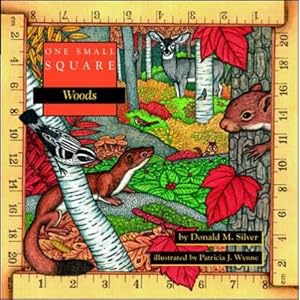
One Small Square series of books are very helpful for those interested in nature. We are currently enjoying one on astronomy, but the ones on pond and woods continue to enjoyed here.

wow. This was a super neat book. Do you know what a citizen scientist is? In the past we have been part of bird counts, but this book opened my eyes to other opportunities you can do still from home. Broken into four seasons of ideas you can help scientific research by tracking butterflies (did you know they actually put stickers ON butterflies?), identifying bugs and more!
The photographs in this book are wonderful! And my kids were excited to see how other kids have done the bird count.
Do you mix poetry and science? With Step Gently Out by Helen Frost and Rick Lieder, I was very impressed.
Beautiful closeup photographs follow a wonderful poem.
Step gently out. be still and watch a single blade of grass....
the creatures shine with stardust...
in song and dance and stillness, they share the world with you. (just a portion of this poem)
I'm inspired to take more close ups of our trips into nature.
Mushroom pickers foolproof field guide gave me delight! I see mushrooms when we go on nature hikes, but am never sure if we could pick them and eat them. Now I know! I'm sad to say that we found (or rather the kids did) some large edible mushrooms late this summer. Because I didn't have this book yet, I wasn't saddened when the kids (and the other homeschooling kids we were with) destroyed them all. They were soccer ball sized and called giant puff-balls. They would have been great for dinner had I known....
One Small Square series of books are very helpful for those interested in nature. We are currently enjoying one on astronomy, but the ones on pond and woods continue to enjoyed here.
Science in your backyard as been a read aloud in our family for several years. It's a trusty book to complete what we've found here in this great backyard of ours. I bought it used, but have found it so filled with great helps. Weather poems to memorize such as "red sky at morning, sailors take warning; red sky at night, sailors delight". Because we live NOWHERE near the sea, we enjoy discovering what us landlocked people can learn from red sky!
We've classified bugs with this book, learned how to make an astrolabe (yes go ahead and look that up!), completed backyard physics and considered winter twigs most recently.
And now that the weather is turning and we've begun to consistently fill up the bird feeders (both in the front and back of the house), we are again reading Birds Through the Year by Gilmore. This out of print treasure gives us a treasure trove of facts about what we can expect to see and discover as we keep our eyes to the skies. Last week we were traveling and saw the largest flock of black birds EVER. What a joy for the kids to see the birds and for mom to pull this book out and fill in the gaps of what we didn't know about migration of these birds.
(go ahead click the link...it's a free B&N nook edition from the original 1923 book! you are welcome!)
Have you found any nature books recently that you'd like to share?
Tuesday, May 31, 2011
Packing for a Nature Trip
A typical Charlotte Mason style atmosphere encourages the child to spend time in nature. The child uses his keen sense of observation to find the world that God made as worth discovering.
My children and I spend lots of time outdoors. In fact, my motto has been "there isn't bad weather, just inappropriate clothing". I've been investing in appropriate clothing for all kinds of Midwestern weather over the years (and that goes for mom too!)

But what to pack in that bag for a day trip out in nature?
Here are some ideas:

nature journals. I like the spiral bound kind so they can be laid flat while drawing. We choose heavy weight paper that can withstand watercolor, pastels, crayons, colored pencils, flower pressing, you get the idea.

What ever kind of medium for sketching/painting. These water color pencils have been fun lately. Just draw, then add the water after!

A rosary. block beeswax crayons in case you'd like to do a rubbing of tree bark or an ancient headstone. compass. empty envelopes in case you come across some seeds! wax paper in case you come across a slide in the woods that needs a little zip (you NEVER know!). plain old pencils.

little guides to identify those birds and butterflies and mushrooms and trees and flowers (okay maybe one or two will do).

binoculars.
and my son says you MUST MUST MUST have a port a bug bag for those critters that just have to come home for the bug display.
not pictured but necessary: water and snacks. Usually a *waterbackpak* is filled with tap water and CLIF bars (homemade or bought) are stuffed in the sides.
So how are your summer plans shaping up for getting out in nature?
Friday, July 8, 2011
and the Mother who learns to dry brush...
As we began to incorporate more Charlotte Mason techniques into this homeschool, I introduced nature journals to the students. This mother has begun to keep one too. I've tried my hand at pencil drawing and charcoal, watercolor palettes and liquid watercolors, and new colored pencils that change into watercolors. It can be hard to decide what medium to take on a nature hike. But above all it's been a discipline to keep a nature journal going.
In the area where I live, a growing number of mothers meet on a monthly basis to talk about using Charlotte Mason techniques in the home. In July of 2010 we decided try some Mother Culture of drybrush painting. We began by watching a DVD by Eve Anderson. She teaches the children how to observe in nature and then returns them to the classroom to demonstrate the "dry brush technique" of watercoloring.
So we, too, went out to collect specimens

I found a birch tree similar to the one in my front yard. A small portion of a branch was collected.

Then I spent about 10 minutes looking at my branch.
Determining the colors of green and brown.
Considering the leaf shape and the vein directions.
Then I layed my specimen next to my empty sheet of watercolor paper.

I used a basic set of 8 watercolors. Basic watercolor brushes.
Upon Eve suggestion, I spent some time mixing the colors to find the correct shade of greens. She said that the one green color that comes in the set is not a natural green and should not be used.
I took some yellow and some blue to make these greens.
To mix the colors, I filled one medium brush with water. Choosing yellow or blue, I collected a lot of color on the brush. I moved the color to the side palate of the watercolor container.

I also added some white and brown. Each time a color was added I cleaned my brush with water.

With the basic colors created, I dried my brush on a paper towel and collected the color onto the brush...just a little at a time almost as if the brush was completely dry. Using small amounts, I put color down onto my dry paper.
After quite a bit of time I found it much easier to make the colors and shapes that seemed similar to the tree branch.

You can see at close up that I used some yellow greens and some darker greens to create a shading effect as well as some empty spaces.
We mothers were very pleased that the discipline of learning dry brush painting came as easy as it did. Now to the discipline of keeping up the practice....
this post is also found at educating mother
Thursday, May 28, 2009
Nature study
As part of our integration of Charlotte Mason techniques, we have been continuing our Nature Journals. This year we even have a two year old participating. This week we continued our study of mushrooms. We used the book The Country Diary of An Edwardian Lady as an extra picture to look at. We also found several mushrooms to copy.

A book by John Hawkinson called Collect, Print and Paint from Nature gave us some great ideas on how to paint with one or two strokes.


Thursday, October 26, 2017
Keeping a Nature Journal in a narrative style
This is a post in response to "Can you give some examples of narrative style of Nature Journaling?"
Here is a nice two page spread of a student from Scale How. I took these photos in May 2017 when I visited Ambleside.


Here is is transcribed.
We went up Loughrigg on (May 22nd) Tuesday. It was a very hot and it was very hard climbing, so we rested half way up and enjoyed the view of the Lake.
There was a boat in the Brathay river under the Brathay rocks which looked very cool. We all thought we would liked to of been there.
When we got to the top there was such a nice cool breeze that we all felt glad we had climbed up instead of returning.
We found Phlox, milkwort, campion, Birds-foot trefoil, Jugnut, sundew, Iris, Good-King-All, Meadows Cranes Bile, Yellow Pimpernel, Stitch wort and Bog Bear. We came back by Canon Bells and up stony lane. We found a great many new flowers which we were very pleased with and we all enjoyed our walk very much and we also hope to again shortly when the mountain primrose are out in full bloom.
The next page has a brush drawing in color that seems to be from a month earlier! But it seems the painting was pasted in. This is very common in the archives to see a narrative of what they did supported by the drawing/sketch/brush drawing.
Here is another and it's transcription.

June 6th
I saw a dragon-fly flying near Rydal today. It was the first one that I had seen this year. It had very transparent wings, which looked very much as though they were made of cellophane paper.
June 9th.
I saw a peculiar animals running into the rushes at Bletham turn. It was mouse colored and about the size of (a pheasant)?, it had a humped back and a fairly small head, it's tail was long, flat and hairy and it had fairly short legs and seemed to run smoothly, we looked for it in the rushes but couldn't find it. There was only one Great-crested grebe to be seen today, I suppose the other one was sitting on the nest, the one we saw came out from the rushes at the far end of the tarn.
I think maybe she saw a muskrat--What do you think?
You can see that she drew a bug and a flower she saw on each of these dates, but didn't really elaborate about them.
Here are a few examples from my children and myself:


Here are two examples of bookmarks we use to help find the next page in our nature journals. Is it just my pet peeve that my kids have just opened their nature journals anywhere to start a new entry?

Print your own copies of bookmarks here. Or fold your own sloyd corner paper bookmark with instructions here.
Wednesday, September 18, 2019
Natural History Clubs and welcoming new members
It's important to get outside everyday. And also to enjoy the out of doors with others.
I'm sharing this document I made years ago especially for families new to nature time and nature study. If you are just staring a nature club or you have families that are joining your existing club that are new to nature experience and journaling, you might find this helpful.
We all move forward from where we are. Welcome and keep going. You are doing great.
Monday, October 22, 2007
Bring a little nature inside...
As the days continue to get cooler (although it was still nearly 80!!! this weekend), we wondered what kinds of nature we could bring inside. I challenged the family to just go around town on a walk to collect our things. This is what our bag looked like when we returned home.

While the kids had their afternoon quiet time ( a REQUIREMENT even on weekends for mommy's sanity), I sorted out what we had collected into two trays. I found my low heat glue gun in the school room and closet and...


While the kids had their afternoon quiet time ( a REQUIREMENT even on weekends for mommy's sanity), I sorted out what we had collected into two trays. I found my low heat glue gun in the school room and closet and...


Soon as they were ready we got started and continued until it was dusk.
(oh dear what happened to dinner?)
Here are some of our fairy folk or nature people. They will grace our tables. Bodies of pinecones, heads of buckeyes or acorns. Even a walnut casing for a baby cradle. A small birds nest chipping sparrow? and loads of pine needles.


Friday, May 2, 2014
Nature Study
It's the time of year when everything is popping out and up and we have to get out there to find it!

"As soon as he (she) is able to keep it himself (herself), a nature-diary is a source of delight to a child. Everyday's walk gives him (her) something to enter..." {Volume 1, p.54)

And delightful it HAS been.
There is a nice write up in the Handbook of Nature Study about Trillium. Several children did drawings of these.
(did you know it's also called birthroot?)
We seem to have Prairie Trillium around here.
"mother cannot devote herself too much to this kind of reading, not only that she may read tid-bits to her children about matters they have come across, but that she may be able to answer their queries and direct their observations." {Volume 6, page 223}

And outside we shall be. The flowers are calling, the birds are calling.
"never be inside when you could be outside. Spend most of the first six years of life outside. Be outside with the children,...keep everyone in a good mood; leave the children alone most of the time; mother may train eyes, ears and also plant seeds of truth within the child. 1-2 hours of active, vigorous play, then a short lesson..." {Volume 1, Part II, p. 42}

Now you know why I am not able to answer the phone.
Thursday, July 19, 2018
Keeping a Nature notebook
Are you in the habit of keeping a nature notebook for yourself? Why not? If you are spending time out of doors I am sure you are making some amazing observations. Keeping track of when and what you've discovered can be a treasure for a rainy day. I love looking back over what I found interesting a few years ago. I see that more than 10 years ago I was keeping Monarch Caterpillars on my kitchen table from the dill they were found on in the back yard. Today I am adding touches of the prairie plants I've seen this week.
Enjoy this Nature Notebook from a student at the House of Education. It's such a treasure to be able to see these without having to travel all the way to England! Link here

Enjoy this Nature Notebook from a student at the House of Education. It's such a treasure to be able to see these without having to travel all the way to England! Link here

Sunday, January 13, 2008
Last Child in the Woods
 I read this book in November and continue to ponder it. I wanted to share some notes that I took on it before I read it again. My memory was jogged yesterday as I observed my 5 year old climbing a tree. I smiled and moved away from the window so as not to scare myself. :) It's moments like these that remind me WHY we moved away from the city. And I dug out my list that's growing.
My top reasons for living farther away from the city:
*nature-we have 11 trees in our yard, an open side yard for running, a patch of land for gardening, and animals and birds that visit us daily
*food-it is more difficult for us to eat out, we spend more time at home and less time away from home, it makes us enjoy the food we have and the place we have to eat it.
*we have less traffic
*we can see the stars at night
*fresh air
*quiet
*and my list goes on....
Quotes and thoughts from this book:
Louv says green spaces foster social interaction and curb cultural autism-the tunneled senses, feelings of isolation and containment, atrophy of the senses due to TV, PC's and phones.....we know that in adults the more screen time they have the more depression they have. But what about kids? This makes me think MORE THAN EVER that our family trips need to be nature trips if at all possible. Museums and art will always be there, but nature might not.
Louv also says that children who play in natural environments vs. manufactured ones engage in more creative forms of play and have more egalitarian forms of play.
I was very intrigued by his stranger-danger myth section. Louv wants parents to help their children realize their power. Teach them to trust their feelings and distance themselves from what ever is making them feel badly. He felt children who were more connected to their parents were less likely to be victimized. I felt happy that we live in an area where I feel safe. I want my children to understand the need to acknowledged strangers, but also trust their feelings about those who might be dangerous....I need to think more about specific ways to do this.

Friday, May 18, 2012
Family trips to Nature spots

I wonder if families are just not taking vacations like they used to. I hear people talking about their fantasy trips to "lands" of magic, but I don't really hear about vacations much any more. And I sure didn't see as many people on our recent trip.

Many of the trinket stores and souvenir shops were boarded up or closed. Where do people take their trips to these days? Are they just staying home? Are they too busy working to take time to enjoy their family? Are they single parents unable to find the way to drive cross country for a time away?

Our family took two trips all together in the last month. Both trips included business for my husband with an extended stay of fun for the kids and I. One or two days of daddy "working" and four to five days of playing. What did we do? We spend those four to five days driving to a place where we could be totally in nature.

Did you hear that? Err Read that? NATURE!

I think that's why we didn't see many people. Is everyone inside on their computers? Quick put yours down and get outside before your brain turns to mush! (or that's usually what we say at our house when we notice the blank stares into the screens).

So we hiked and walked and discovered.

The local flora and fauna inspired us.

We climbed in caves and sang at the tops of mountains.

Do you get away and get outside? If not, I hope you consider it soon!

And take advantage of the National Parks while they are still free.
